Best Corporate Retreat Locations United States: A Strategic Guide
The strategic withdrawal of a workforce from its primary operational environment is often viewed through a lens of leisure, yet for the resilient enterprise, it remains a high-stakes investment in social capital. The American landscape offers a diverse array of geographies that serve as more than just backdrops; they function as active variables in the recalibration of team dynamics and the distillation of corporate strategy. Best Corporate Retreat Locations United States. As organizations move toward increasingly distributed models of labor, the physical gathering—the retreat—has transitioned from an annual luxury to a critical synchronization event.
Effectively navigating the selection of these environments requires a departure from the “travel agency” mindset. It involves an analytical assessment of how space influences behavior. A remote lodge in the Pacific Northwest fosters a different cognitive state than a high-service coastal resort in Florida or a sprawling ranch in the Mountain West. To master the selection process, one must evaluate a location not merely by its amenities, but by its “atmospheric alignment”—the degree to which the physical environment supports the specific psychological and strategic objectives of the gathering.
In an era defined by economic volatility and the “war for talent,” the stakes for these off-sites have never been higher. A poorly executed retreat—characterized by logistical friction, misaligned programming, or an uninspiring setting—can lead to a “false economy” where significant capital is deployed without achieving any measurable increase in team cohesion or strategic clarity. Conversely, a well-placed retreat acts as a force multiplier for organizational culture. This exploration provides a definitive framework for identifying and utilizing the premier environments within the United States to achieve these high-value outcomes.
Understanding “best corporate retreat locations united states”
Identifying the best corporate retreat locations united states is a task frequently undermined by a focus on “destination prestige” rather than “operational utility.” A high-end resort in Aspen may be aesthetically peerless, but if the logistical complexity of transporting a 50-person team to a mountain town results in pervasive traveler fatigue, the location is a strategic failure. To understand this discipline, one must view the location as a “variable of influence.” The setting must be calibrated to the retreat’s specific intent—whether that is radical innovation, crisis resolution, or cultural integration.
One significant oversimplification involves the belief that “isolation equals focus.” While removing a team from urban distractions can facilitate deep work, total isolation can also lead to a “cabin fever” effect or logistical bottlenecks regarding technical support and high-quality nutrition. The most effective locations are those that offer “curated seclusion”—environments that feel remote and restorative but are underpinned by the infrastructure of a Tier-1 metropolitan area.
The risk of choosing based on popular rankings alone is the “cliché trap.” When a location becomes too synonymous with corporate retreats, it often loses its ability to surprise or inspire. The most sophisticated organizations look for locations that offer a “narrative shift”—a setting that is fundamentally different from the team’s daily reality, forcing a break in habitual thinking patterns. Excellence in this category is found in the intersection of logistical ease, sensory novelty, and professional-grade infrastructure.
Contextual Evolution: From Executive Getaways to Strategic Synchronization
The American corporate retreat has its roots in the mid-century “Executive Club” culture, where high-level leaders would retreat to private hunting lodges or golf resorts for informal networking and leisure. During this era, retreats were largely exclusionary, serving as a perk of status rather than a tool for organizational development. The focus was on “recreation” in its most literal sense—re-creating the social bonds of the leadership class through shared leisure activities.
The 1980s and 90s saw the rise of the “Team-Building” era, characterized by structured activities and a shift toward middle-management involvement. This period was often defined by the “ropes course” cliché—physical challenges intended to build trust. However, the modern era, accelerated by the post-2020 distribution of labor, has entered the “Strategic Synchronization” phase. Retreats are now the primary vehicle for establishing “cultural glue” in a world where employees may rarely see each other in person. The evolution has moved from leisure, to forced bonding, to the intentional engineering of organizational alignment.
Conceptual Frameworks for Environment Selection
The “Friction-to-Focus” Ratio
This framework evaluates the total effort required to reach a location against the cognitive clarity the location provides. A location that requires two flights and a three-hour shuttle ride has a high “friction score.” For that location to be the “best,” the environmental payoff (e.g., the absolute silence of a high-desert sanctuary) must be significant enough to justify the initial exhaustion.
The Atmospheric Alignment Model
Space influences psychology. High-ceilinged, expansive environments (like the American Southwest) have been shown to facilitate abstract, long-term strategic thinking. Conversely, cozy, wood-paneled, and “enclosed” environments (like a Vermont lodge) are superior for resolving conflict or deep, forensic problem-solving. Selection should be based on the “shape” of the work to be done.
The “Third-Place” Neutrality Filter
A retreat should never feel like an extension of the office. The “best” locations are those that provide “territorial neutrality”—a space where hierarchy can be temporarily flattened because no one “owns” the environment. This is why hosting a retreat at a satellite office is rarely as effective as choosing a dedicated, neutral destination.
Taxonomy of Locations: Categories and Strategic Variations
The premier environments in the U.S. can be categorized by their “energetic profile” and operational trade-offs.
| Category | Typical Geography | Primary Benefit | Strategic Trade-off |
| High-Desert Sanctuaries | Sedona, Joshua Tree, Santa Fe | Abstract Thinking / Renewal | Extreme Climate / Aridity |
| Mountain Frontier Lodges | Jackson Hole, Park City | Resilience / Perspective | Altitude / Logistical Cost |
| Coastal Restorative Hubs | Sea Island, Outer Banks | Relaxation / Rhythm | Seasonal Weather Risks |
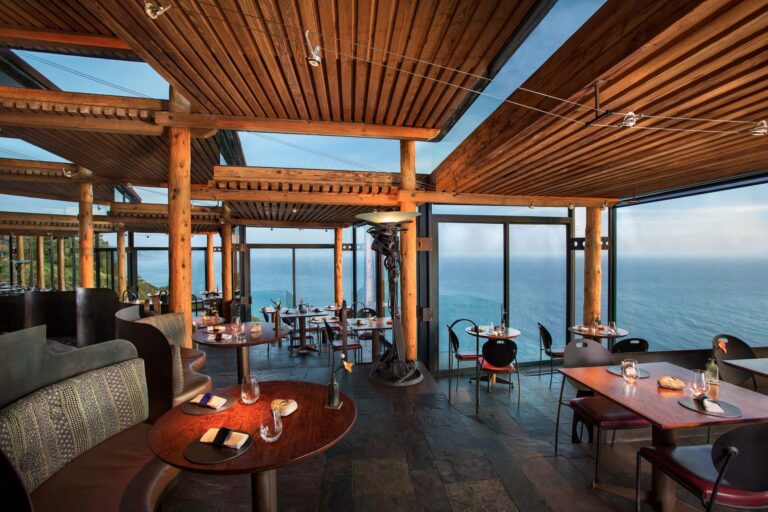
| Pacific Forest Retreats | Olympic Peninsula, Big Sur | Creativity / Deep Focus | High Dampness / Travel Time |
| Urban Intellectual Hubs | Boston, Charleston | Cultural Access / Speed | Higher Distraction Rates |
| Working Ranch Estates | Montana, Texas Hill Country | Authentic Bonding / Space | Limited Formal Workspaces |
Decision Logic: The Archetype Filter
If the goal is “Annual Strategic Planning,” the High-Desert or Mountain Frontier archetypes are superior due to the vast vistas that encourage “blue-sky” thinking. If the goal is “M&A Integration,” a Coastal Restorative Hub is often better, as the rhythmic environment of the ocean lowers cortisol and facilitates smoother social integration between two previously disparate cultures.
Operational Real-World Scenarios and Decision Logic Best Corporate Retreat Locations United States
Scenario 1: The High-Growth Tech Sprint
A 30-person engineering team needs to finalize a product roadmap over four days.
-
Failure Mode: Choosing a sprawling resort with a heavy “golf and spa” focus.
-
Optimal Strategy: A dedicated forest retreat in the Pacific Northwest with “war room” facilities and limited cellular service. The environment encourages deep, uninterrupted technical focus.
Scenario 2: The Executive “Turnaround” Session
A leadership team must resolve a period of significant internal conflict.
-
Failure Mode: An urban hotel in a busy financial district.
-
Optimal Strategy: A remote, high-service ranch in Montana. The shared, authentic experience of “the frontier” and the physical distance from corporate headquarters allows for a “reset” of interpersonal dynamics.
Economics of the Off-site: Direct, Indirect, and Resource Costs
The fiscal reality of an off-site is that the resort invoice is often only 40-50% of the true cost.
The Resource Impact Table
| Tier | Direct Cost (Per Head/Day) | Indirect Admin Cost | Productivity Opportunity Cost |
| Boutique Local | $300 – $600 | Moderate | 2 Days (Travel/Recovery) |
| Tier-1 Destination | $800 – $1,500 | High | 3 Days |
| Exclusive Buyout | $2,500+ | Very High | 4+ Days |
Note: The “Opportunity Cost” is the most significant variable—if a retreat for 100 people fails to produce strategic clarity, the company has effectively lost 300-400 workdays of high-value labor.
Infrastructure, Strategy, and Support Systems
To transform a “trip” into a “retreat,” certain systems must be in place:
-
Redundant Connectivity: Even “off-the-grid” locations must have symmetrical gigabit fiber or low-latency satellite links for emergency operational needs.
-
Modular Social Spaces: Furniture that can be moved to facilitate everything from a 1:1 conversation to a full-group workshop.
-
Bespoke Nutritional Design: Moving away from “buffet fatigue” toward anti-inflammatory, energy-sustaining menus that prevent the “afternoon slump.”
-
Transport Consolidation: Utilizing chartered movement to ensure the team arrives as a unit, reducing individual administrative friction.
-
Facilitator Integration: The use of external moderators who “own” the process, allowing the leadership team to be fully present as participants.
Risk Taxonomy: Failure Modes in Off-site Planning
-
The “Mandatory Fun” Risk: Forcing activities (like karaoke or trust falls) that create resentment rather than bonding.
-
The Logistical “Fragility” Risk: Choosing a location with only one access road or one small regional airport, making the entire event vulnerable to weather-related cancellations.
-
The “Policy-Leeway” Risk: Ambiguity around behavioral expectations leading to incidents that create HR liabilities.
-
The “Information Leakage” Risk: Conducting sensitive strategic sessions in public areas of a resort where competitors may be staying.
Governance, Maintenance, and Adaptive Program Design
A retreat is a “living” event that requires real-time adjustment.
-
The Pulse-Check Protocol: Short, anonymous surveys conducted each evening to adjust the following day’s agenda based on the team’s energy levels.
-
The “Empty Space” Rule: For every four hours of programmed content, there should be two hours of “unstructured” time. This is where the most valuable organic networking occurs.
-
Review Cycles: A post-mortem 30 days after the retreat to see which strategic decisions made during the off-site actually survived the return to the office.
Measurement: Quantifying Cultural and Strategic ROI
Organizations should track three levels of impact:
-
Immediate (Qualitative): Sentiment analysis of the team’s “mission-readiness” post-retreat.
-
Intermediate (Operational): The speed of project execution in the 90 days following the event.
-
Long-Term (Structural): Employee retention rates and “Employee Net Promoter Scores” (eNPS) compared to the prior year.
Common Misconceptions and Industry Myths
-
“The best retreats are the most expensive”: Some of the most effective retreats are “back-to-basics” gatherings that focus on conversation over luxury.
-
“Activity is the same as engagement”: A packed schedule often leads to “retreat fatigue,” where attendees are too tired to engage in meaningful dialogue.
-
“Alcohol is a necessary social lubricant”: Modern retreats are increasingly moving toward “wellness-first” models to avoid the productivity drain and HR risks of open bars.
-
“Everyone loves the beach”: Significant segments of the workforce find “sand and sun” distracting or physically uncomfortable for professional work.
Conclusion
The selection of a retreat environment is a declaration of organizational intent. The best corporate retreat locations united states are those that act as catalysts for transformation—places that recognize the fragility of human connection and provide the physical and psychological safety required to strengthen it. By moving beyond the surface-level allure of hospitality and embracing a framework of strategic alignment, an enterprise can ensure that its moments of “withdrawal” are its most significant steps forward. In the final analysis, the location is not just where the team goes; it is what the team becomes while they are there.