Best Airport Hotels United States: The Definitive 2026 Strategic
The architecture of modern air travel is often viewed through the prism of the terminal—the frantic movement of passengers, the logistical choreography of baggage, and the high-precision management of flight paths. Yet, for the professional traveler or the exhausted transcontinental tourist, the most critical component of the aviation ecosystem is the “Terminal-Adjacent Infrastructure.” Best Airport Hotels United States. This sector, encompassing the high-performance hospitality assets located within or immediately surrounding major hubs, has undergone a fundamental transformation. What was once a collection of utilitarian rest stops characterized by fluorescent lighting and sound-leaking windows has evolved into a sophisticated network of “Biological Recovery Centers.”
In the current landscape, the value of a premier airport hotel is no longer measured solely by proximity. The elite tier of these properties—such as the Grand Hyatt at SFO, recently recognized as a global leader in the 2026 World Airport Awards—operates on a principle of “Temporal Preservation.” For the corporate executive, an extra three hours of high-quality sleep or a private, soundproofed environment for a high-stakes virtual board meeting is not a luxury; it is a structural necessity that justifies the “Total Cost of Trip.” These environments are engineered to mitigate the physiological toll of travel, integrating advanced biophilic design, circadian-conscious lighting, and high-density acoustic insulation.
As we navigate an era where the boundary between “office” and “elsewhere” has permanently dissolved, the airport hotel has emerged as the new corporate headquarters. Large organizations are increasingly utilizing these “In-Terminal Assets” for short-term strategic intensives, bypassing the logistical friction of city-center commutes entirely. This analysis serves as a definitive reference for identifying and vetting the premier hospitality anchors within the American aviation network, exploring the structural, technological, and economic drivers that define the industry’s most resilient assets.
Understanding “best airport hotels united states”
To categorize and evaluate the best airport hotels united states, one must look past the star ratings and brand nameplates that dominate search algorithms. A professional editorial assessment treats these properties as “Intermodal Interface Anchors.” They are not merely places to sleep; they are high-performance extensions of the terminal itself. A venue may offer luxury amenities, but if its “shuttle-to-gate” transition time is unpredictable, it fails the fundamental requirement of an airport asset.
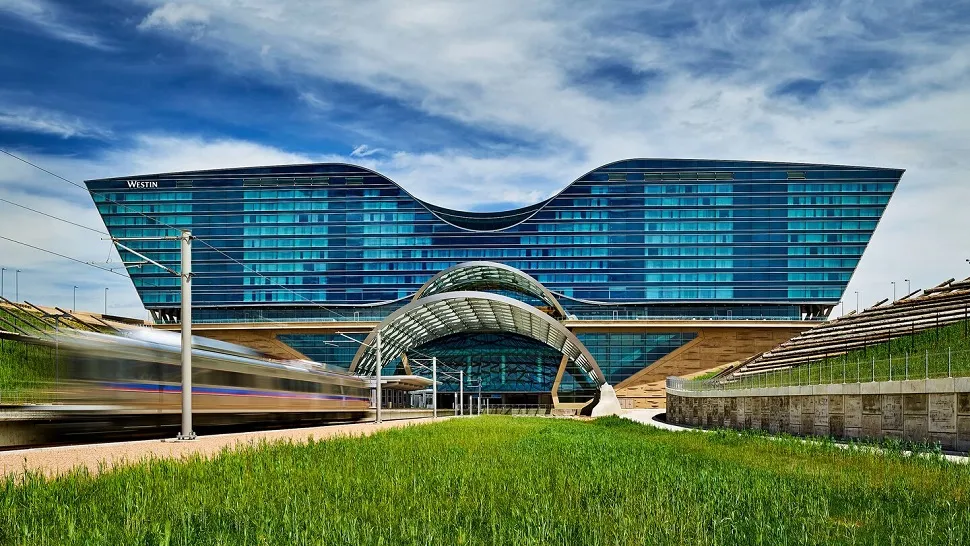
The primary misunderstanding in this sector is the belief that “on-airport” is always superior to “off-airport.” In reality, the distinction lies in “Seamless Connectivity.” A property like the TWA Hotel at JFK or the Westin Denver International Airport offers direct pedestrian access to security, which provides a psychological “Time Certainty” that a shuttle-reliant hotel cannot match. However, some “off-site” properties compensate for the 5-minute ride with significantly superior “Productivity Infrastructure”—larger desk footprints, private meeting suites, and superior 5G density.
Multi-perspective analysis also requires examining the “Acoustic Integrity” of the building. A top-tier airport hotel is defined by its “Silence-to-Decibel” ratio. Properties that utilize triple-paned, argon-filled glass and decoupled floor structures to neutralize the roar of a GE90 engine are the true leaders. For the high-stakes traveler, the “Luxury” of these spaces is found in the absence of noise and the presence of high-bandwidth, symmetrical internet, rather than the thread count of the linens.
The Historical Trajectory of Airport Hospitality
The American airport hotel was born in the 1950s as a direct response to the “Commercial Jet Age.” Before 1958, air travel was the province of the elite, and travel times were sufficiently long that “en route” rest was usually handled in city centers. The introduction of the Boeing 707 and the Douglas DC-8 created a new class of “Transit-Focused Travelers” who needed proximity above all else. Early properties were often “motel-style” structures, built quickly on the periphery of emerging hubs like O’Hare or Atlanta Hartsfield.
The 1980s and 90s marked the “Commoditization Era.” Airport hotels became “black box” environments—architecturally uninspired buildings that served as a hedge against flight cancellations and bad weather. During this period, the “Airport Hotel” was a distress purchase, not a choice. However, the 2010s saw a pivot toward “Experience-Driven Logistics.” This era introduced the first wave of truly integrated, in-terminal luxury hotels that felt like part of the city’s civic identity, rather than just a logistical byproduct of the airport.
In 2026, we have entered the age of “Biophilic and Smart Integration.” The modern premier airport hotel is a “Carbon-Conscious Ecosystem.” Following the 2026 World Airport Awards’ focus on sustainability, the leading properties are those that have integrated large-scale solar arrays, LEED Platinum certifications, and AI-driven HVAC systems that adjust to occupancy in real-time. The goal has shifted from “minimizing misery” to “maximizing human performance,” with properties now offering high-tech wellness suites designed to reset a traveler’s circadian rhythm within hours.
Conceptual Frameworks for Venue Valuation
Strategic travelers and corporate planners should apply specific mental models when vetting high-utility airport stays.
The “Zero-Friction” Transit Model
This model evaluates a hotel based on the “Terminal-to-Table” duration—the time elapsed from deplaning to sitting at a desk or restaurant. An in-terminal property with a 3-minute AirTrain connection is valued at a significant premium over a “luxury” property that requires a 15-minute shuttle wait in 30°F weather.
The “Productivity-to-Price” Index
This assesses the venue’s ability to act as a surrogate office. It measures the desk-to-room ratio, the presence of soundproofed “huddle rooms,” and the latency of the local Wi-Fi. A hotel that provides a “private 5G slice” for its guests is a superior business asset regardless of its gym size.
The “Biological Recovery” Framework
This model prioritizes physiological metrics. Does the hotel offer 100% blackout curtains, a menu of “sleep-inducing” nutrition, and air filtration systems that meet HEPA standards? In a state of jet lag, the “Value” of the hotel is its ability to facilitate REM sleep in a high-decibel environment.
Architectures of Rest: Categories and Strategic Variations
The “Best” hotel depends entirely on the specific failure mode of the traveler’s itinerary.
| Category | Typical Profile | Primary Value | Trade-off |
| The In-Terminal Flagship | Grand Hyatt SFO, Westin DEN | Direct terminal access | High demand/Premium pricing |
| The Historical Icon | TWA Hotel (JFK) | Experience/Brand prestige | Older footprints; noisy public areas |
| The Corporate Powerhouse | Hyatt Regency DFW | Massive meeting capacity | Large footprint; complex navigation |
| The Boutique Tech-Hub | High-spec modern off-sites | Advanced A/V; private | Reliance on shuttle logistics |
| The “Short-Stay” Pod | YOTEL, Minute Suites | Hourly rates; in-secure zone | Minimalist; no traditional amenities |
Detailed Real-World Operational Scenarios Best Airport Hotels United States
Scenario 1: The “Tight-Connection” Recovery
An executive lands at 11 PM after a 12-hour flight and has an 8 AM departure.
-
The Choice: An in-terminal property like the Fairmont Vancouver or Hyatt Regency O’Hare.
-
The Logic: Every minute saved on transit is a minute earned in sleep. The premium cost is amortized against the executive’s billable rate.
Scenario 2: The “Stranded-Team” Command Center
A winter storm cancels 500 flights, leaving a 10-person project team grounded.
-
The Choice: A property with extensive meeting space and “all-day dining,” such as the Hilton Boston Logan.
-
The Logic: The team can transition from “crisis mode” to “work mode” without leaving the building, using the hotel as a secure war room.
Planning, Cost, and Resource Dynamics
The “Sticker Price” of an airport hotel is a lagging indicator of its true cost. For the professional, the “Opportunity Cost” of a poor location is the primary driver.
Range-Based Operational Cost Table (2026 Estimates)
| Service Tier | In-Terminal Luxury | Prime Off-Site | Budget/Transit |
| Standard Room | $450 – $750 / night | $220 – $380 / night | $120 – $180 / night |
| Hourly Rate | N/A (Full night) | N/A | $45 – $85 / hour |
| Day Use Rate | $150 – $250 (6 hrs) | $95 – $150 | Included in hourly |
| Shuttle Wait | 0 minutes | 10 – 20 minutes | 15 – 30 minutes |
The “Day Rate” Strategy:
Many of the best airport hotels united states offer “Day Use” rates that are not visible on standard booking engines. These are critical for travelers with 8-hour layovers who need a shower and a high-speed connection but do not require an overnight stay.
Technological and Logistical Support Ecosystems
The “Soft Assets” of an airport hotel are now more important than the architecture.
-
AI-Driven Flight Monitoring: In-lobby and in-room dashboards that update in real-time based on FAA data, allowing guests to stay in bed longer during delays.
-
Contactless Key-to-Gate: Mobile check-in systems that bypass the lobby entirely, allowing a “curb-to-room” transition in under 2 minutes.
-
Sound-Masking Technology: Active noise-canceling systems built into the headboards to neutralize high-frequency jet noise.
-
Circadian Lighting Suites: Smart bulbs that adjust color temperature (Kelvin) based on the guest’s destination time zone to prevent jet lag.
-
Private 5G Slices: Dedicated cellular bandwidth for guests handling sensitive corporate data, bypassing the risks of public Wi-Fi.
-
Smart-Locker Luggage Transfer: Secure lockers that allow guests to drop bags for hotel-to-gate delivery (where airport regulations permit).
Risk Landscape and Failure Modes
Even a premier hotel can fail if the “Systemic Integration” with the airport is broken.
-
The “Shuttle Paradox”: If a hotel is only 1 mile away but relies on a shared shuttle that circles 4 terminals, the “Effective Distance” can be 40 minutes during peak hours.
-
The “Catering Collapse”: Most airport hotels have a single kitchen. During a “Mass-Cancellation Event” (MCE), room service wait times can exceed 3 hours, rendering the “luxury” aspect moot.
-
The “Security Breach”: Hotels with public-access lobbies that connect directly to terminals are high-traffic zones; a failure in perimeter security can lead to a “shelter-in-place” order that grounds the hotel’s operations.
Governance, Maintenance, and Asset Adaptation
For the hotel operator, maintaining a “Top-Tier” status in an airport environment requires a high “Capital Expenditure (CapEx) Refresh Rate.”
The “Aviation-Grade” Maintenance Checklist
-
Glazing Seal Integrity: Checking the acoustic seals on all windows every 12 months to ensure decibel levels haven’t crept up.
-
HVAC Filter Cycles: High-density air filtration requires 4x the standard maintenance due to the high concentration of particulate matter (jet exhaust) in the local atmosphere.
-
Connectivity Audits: Bi-weekly “Speed Tests” in every room to ensure no dead zones for 5G or Wi-Fi 7 signals.
Measurement, Tracking, and Evaluation Metrics
How do you measure the “Performance” of an airport stay?
Leading Indicators:
-
“Check-in-to-Sleep” Latency: The time from arriving at the hotel entrance to being in the room with the lights off.
-
Flight Update Precision: The accuracy and speed of the hotel’s departure boards compared to the official airport data.
Qualitative Signals:
-
The “Decibel Floor”: The recorded ambient noise in the room during a heavy-aircraft takeoff (should be below 35dB).
-
The “Restoration Score”: Self-reported guest data on whether they felt “refreshed” versus just “rested.”
Common Misconceptions and Oversimplifications
-
“Free shuttle means easy access.” Many “free” shuttles run on 30-minute loops. Always check the frequency, not just the price.
-
“Higher floors are quieter.” At an airport, noise often travels up; sometimes the 3rd floor is quieter than the 15th due to the “Acoustic Shadow” of the terminal building.
-
“In-terminal food is always better.” Most in-terminal hotels have superior kitchens to the terminal’s food court, specifically for evening “calm dining.”
-
“Airport hotels are just for layovers.” They are increasingly used as “halfway points” for distributed teams to meet for 24 hours without anyone needing a rental car.
-
“Points are the best way to book.” During MCEs, cash-paying guests are often prioritized for overbooked rooms over “points” guests.
-
“Modern windows block all noise.” Low-frequency vibration (the “rumble”) is harder to block than high-frequency noise. Only properties with floating floors address the rumble.
-
“The hotel gym is just a bonus.” For the long-haul traveler, a 24-hour gym is a critical tool for stimulating blood flow and preventing Deep Vein Thrombosis (DVT).
Ethical and Practical Considerations
The “Sustainability Gap” in airport hospitality is a growing concern. While a hotel can be LEED-certified, its existence is tied to one of the most carbon-intensive industries on earth. The best airport hotels united states are now bridging this gap by offering “Green-Stay” incentives and investing in Sustainable Aviation Fuel (SAF) partnerships. Practically, the “Ethical Choice” involves supporting properties that provide fair labor standards for their shuttle drivers and cleaning staff—the often-invisible backbone of the 24/7 aviation economy.
Synthesis and Strategic Conclusion
The selection of a premier airport hotel is an exercise in “Logistical Rigor.” In a world where time is the ultimate currency, the ability to bypass the uncertainty of urban traffic and enter a controlled, silent, and high-performance environment is a profound advantage.
The future of these spaces lies in “Hyper-Integrated Mobility”—hotels that are not just near the airport, but are functionally indistinguishable from it. As biometric security and automated baggage handling become the norm, the “Hotel Room of the Future” will act as a secondary gate, allowing guests to check their bags and complete security protocols from their own suites. For the strategic traveler, the “Best” choice is the one that transforms the friction of the journey into a period of high-utility rest and professional clarity.