Compare Corporate Lodging: A Strategic Guide to Professional Stays
The selection of professional accommodation has evolved from a simple matter of proximity to a complex analysis of productivity, legal compliance, and human capital retention. In an era where “anywhere work” and globalized supply chains are the norm, the physical space an employee occupies during a business engagement acts as an extension of the corporate environment. Compare Corporate Lodging. Consequently, the criteria for evaluating these spaces have shifted; it is no longer sufficient to merely provide a bed and a desk. Organizations must now account for secure connectivity, mental well-being, and the logistical fluidity of the surrounding infrastructure.
Deciding between disparate housing models requires a sophisticated understanding of the underlying trade-offs. The hospitality industry has fragmented into a dizzying array of niches—from traditional luxury hotels and boutique establishments to serviced apartments and the “sharing economy” for professionals. This fragmentation complicates the decision-making process for procurement officers and travel managers, who must navigate varying tax implications, safety standards, and service-level agreements across different jurisdictions.
To manage this complexity, a high-level editorial approach is necessary. We must move beyond the superficial metrics of nightly rates and look toward the “Total Cost of Stay.” This includes hidden factors such as commute-induced fatigue, the availability of nutritious food options, and the security of the digital infrastructure. An organization’s ability to effectively assess these variables often determines the success of the mission for which the travel was initiated.
Understanding “compare corporate lodging”
When organizations set out to compare corporate lodging, they are often lured into a reductive trap: the belief that all units of accommodation are interchangeable commodities. In a professional context, “lodging” is an operational platform. If that platform fails—whether through a lack of reliable power, poor acoustic insulation, or inadequate security—the employee’s primary objective is compromised. A comparison, therefore, must be multidimensional, weighing the psychological needs of the traveler against the fiscal constraints of the organization.
A common misunderstanding in this space is the over-reliance on star ratings. A five-star hotel in a city center might offer unparalleled luxury but fail a project team that needs communal work areas and laundry facilities for a three-week deployment. Conversely, a serviced apartment might offer the necessary space but lack the 24/7 concierge and security presence required for high-profile executive travel. Effective comparison requires a “fit-for-purpose” lens that prioritizes the specific constraints of the trip over generic industry labels.
The risk of oversimplification is particularly acute in the digital age, where polished marketing photography can mask systemic failures in maintenance or service. A robust comparison framework must account for “service reliability”—the probability that the promised amenities will actually function as intended. Without this nuanced view, procurement teams risk optimizing for the lowest bid while inadvertently increasing the total cost of the business engagement through employee burnout and operational delays.
The Evolution of the Professional Stay
Historically, corporate housing was a binary choice: the hotel or the long-term rental. The mid-20th century saw the rise of the standardized global hotel chain, which provided a reliable, if sterile, environment for the business traveler. This was the era of the “standardized experience,” where a room in London looked and felt identical to a room in New York.
The 1990s introduced the “extended stay” hotel, a hybrid model designed for consultants and project managers. However, the true disruption occurred with the advent of the digital economy, which blurred the lines between residential and commercial spaces. Today, we see a convergence where hotels are adding kitchenettes and coworking spaces, while residential providers are adopting hotel-like security and housekeeping protocols. This “blurring” makes the task to compare corporate lodging more difficult but also more rewarding for those who can identify the best hybrid options.
Conceptual Frameworks for Accommodation Analysis
To navigate these options, three primary mental models can be applied:
-
The “Home-Office” Continuum: This model evaluates a property based on its balance between domestic comfort (cooking, privacy) and professional utility (high-speed internet, ergonomic desks). Short-duration trips often skew toward the office end, while long-duration stays must prioritize the home end to prevent “traveler fatigue.”
-
The Duty of Care Anchor: This framework treats security and health as non-negotiable anchors. Any lodging option that falls below a certain threshold of fire safety, neighborhood security, or hygiene is discarded immediately, regardless of its cost-saving potential.
-
The Proximity-Value Matrix: This measures the trade-off between the nightly rate and the cost of transit. A cheaper hotel 45 minutes away from the work site often loses its value when the cost of executive time and ground transportation is added to the ledger.
Key Categories and Market Variations
Choosing the right model requires a deep understanding of the structural differences between providers.
| Category | Primary Benefit | Primary Drawback | Ideal Use Case |
| Traditional Hotel | Consistency & Service | Limited Space/High Cost | Short 1–3 day trips. |
| Boutique Hotel | Cultural Context | Inconsistent Standards | Client-facing meetings. |
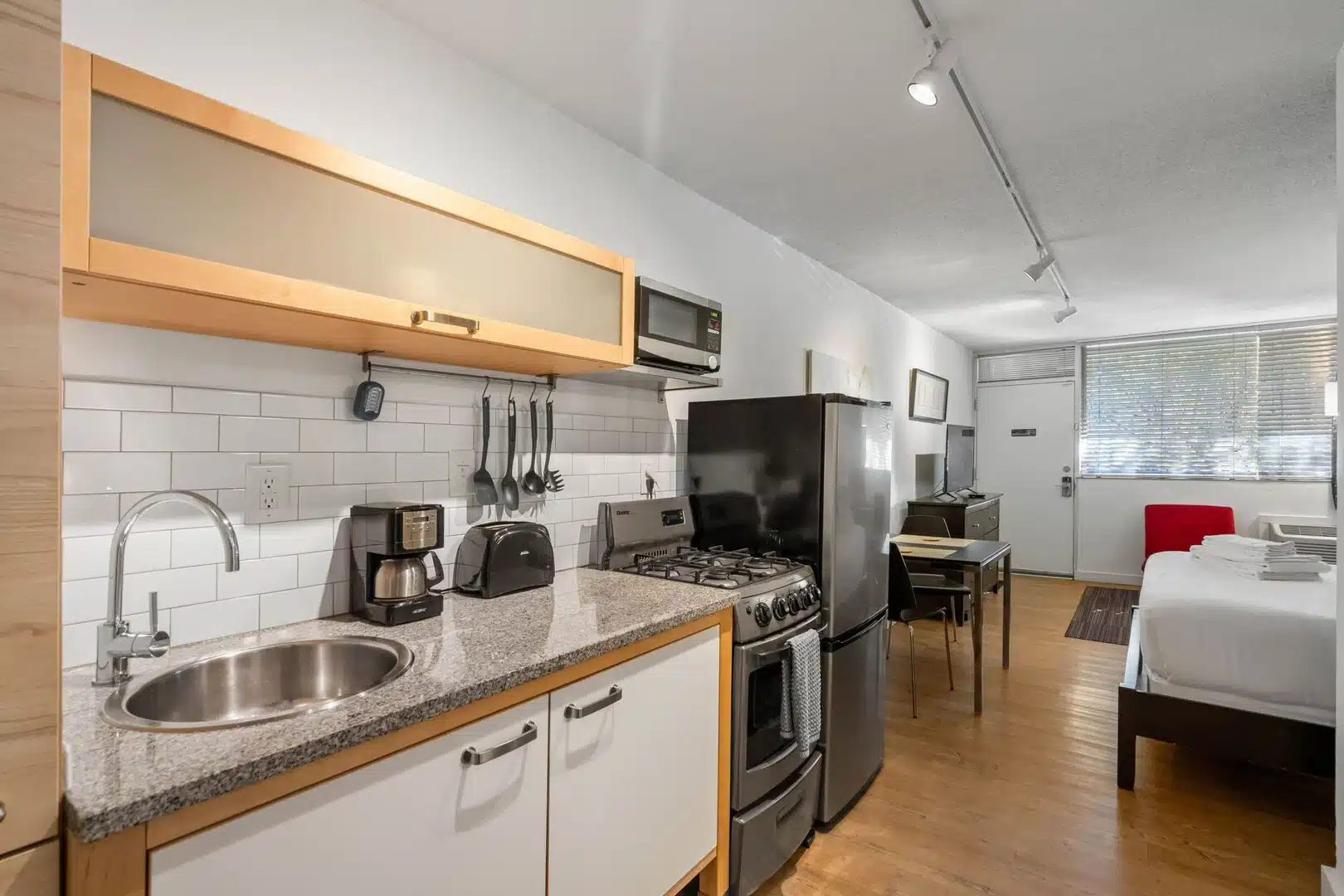
| Serviced Apartment | Autonomy & Kitchens | Reduced Front-Desk Support | 7–30 day projects. |
| Corporate Housing | Residential Feel | High Minimum Stays | Relocation/Quarterly stints. |
| Hybrid/Aparthotel | Flexibility | Can be “Neither-Nor” | Agile teams; 3–14 days. |
Decision Logic: The Duration-Complexity Filter
As the duration of a stay increases, the importance of “domestic” amenities grows exponentially. For a 48-hour trip, a lack of a refrigerator is a minor inconvenience. For a 14-day trip, it becomes a significant driver of meal costs and traveler dissatisfaction. When you compare corporate lodging, the length of stay should be the primary filter through which all other features are viewed.
Real-World Scenarios and Failure Modes Compare Corporate Lodging
Scenario A: The M&A Negotiation
A high-stakes legal team requires absolute privacy and 24/7 catering.
-
Optimal Choice: A luxury hotel with a dedicated club lounge and secure meeting rooms.
-
Failure Mode: Choosing a serviced apartment where “external” visitors are not vetted, leading to a breach of confidentiality.
Scenario B: The Regional Audit
A team of four auditors needs to collaborate every evening for three weeks.
-
Optimal Choice: Two-bedroom serviced apartments or an aparthotel with communal “living” zones.
-
Second-Order Effect: Improved team cohesion and significantly reduced per-diem costs for meals.
Economic Dynamics: Direct and Opportunity Costs
The financial impact of lodging extends far beyond the “rack rate.”
Direct Costs
These are the visible expenses: the nightly rate, taxes, resort fees, and parking. In many markets, these can fluctuate by 300% depending on local events.
Indirect and Opportunity Costs
-
Productivity Loss: A hotel with poor Wi-Fi can cost a company hours of billable time per day.
-
Health and Wellness: The lack of a gym or healthy dining options can lead to increased sick leave or reduced cognitive performance.
-
Administrative Burden: Fragmented booking across multiple platforms increases the complexity of VAT recovery and expense auditing.
Expense Variability Table
| Lodging Tier | Daily Rate Range | Monthly Equivalent | Support Level |
| Tier 1 (Luxury) | $450 – $900 | $13,500+ | High-Touch |
| Tier 2 (Mid-Scale) | $180 – $350 | $5,400 – $10,500 | Standard |
| Tier 3 (Extended) | $120 – $250 | $3,600 – $7,500 | Minimalist |
Support Systems and Security Infrastructure
A sophisticated lodging strategy requires a technological and human backbone. This includes:
-
Centralized Booking Portals: Ensuring all data is captured for duty of care.
-
Safety Vetting Protocols: Independent audits of fire, life, and safety (FLS) standards.
-
Cybersecurity Measures: Vetting the encryption standards of the property’s network.
-
Billing Consolidation: Moving from individual reimbursements to direct corporate billing to improve cash flow management.
Risk Taxonomy and Compounding Vulnerabilities
Risk is not static. A “safe” hotel in a stable neighborhood can become a risk if the city experiences civil unrest or an infrastructure collapse.
-
Operational Risk: The property goes into “limited service” mode without notice.
-
Financial Risk: Hidden fees or double-billing on corporate cards.
-
Reputational Risk: An employee is involved in an incident at a property that does not meet the company’s ethical or safety standards.
Governance, Maintenance, and Adaptation
Organizations must compare corporate lodging options through a rigorous governance lens. This is not a one-time audit but a continuous cycle.
-
Review Cycles: Quarterly assessments of traveler feedback.
-
Adjustment Triggers: If a property’s “cleanliness score” drops below a certain threshold twice in a row, it is automatically blacklisted.
-
The Layered Checklist: A tiered approach that checks for “Hard Requirements” (Security, Wi-Fi) and “Soft Preferences” (Natural light, Fitness center).
Measurement, Tracking, and Evaluation
Success is measured through a blend of quantitative and qualitative data.
-
Leading Indicators: Policy compliance rates and average booking lead times.
-
Lagging Indicators: Total lodging spend per department and employee NPS (Net Promoter Score) for travel.
-
Documentation Examples: Monthly “Leakage Reports” that show where employees are booking outside of approved channels and why.
Common Misconceptions in Lodging Strategy
-
“Airbnb is always cheaper”: Once you add cleaning fees, service fees, and the lack of corporate discounts, the price often paritys with mid-scale hotels.
-
“Star ratings guarantee safety”: Many high-end hotels in developing markets fail basic Western fire-safety standards.
-
“Distance doesn’t matter”: Traffic in emerging markets can turn a 5-mile commute into a 90-minute ordeal.
Conclusion
The ability to accurately compare corporate lodging is a hallmark of a mature organization. It represents a shift from viewing employees as costs to viewing them as critical infrastructure. By applying a rigorous, editorial-grade analysis to where and how professionals stay, companies can ensure that their physical footprint supports their strategic goals. The “best” stay is one that the traveler forgets because it worked perfectly—allowing them to focus entirely on the work they were sent to do.