How to Avoid Duplicate Travel Billings: The Definitive Guide (2026)
Modern travel commerce operates within a sprawling, fragmented infrastructure of Global Distribution Systems (GDS), third-party aggregators, and legacy banking protocols. This complexity, while enabling near-instantaneous bookings across continents, creates a fertile environment for financial redundancies. How to Avoid Duplicate Travel Billings. Duplicate billings are rarely the result of overt malice; rather, they emerge from the asynchronous communication between merchant gateways and issuing banks. When a traveler or corporate entity initiates a transaction, a chain of “pre-authorizations” and “settlements” begins, and it is within the gaps of this multi-stage process that capital often becomes trapped in a state of double-entry.
The systemic erosion of travel budgets through redundant charges is a challenge that scales with frequency. For the occasional traveler, a duplicate hotel hold is a temporary nuisance; for a multinational corporation managing thousands of room nights annually, it represents a significant leakage of working capital and an administrative burden that can strain treasury departments. Addressing this issue requires a shift in perspective, moving from a reactive “dispute” mindset to a proactive architecture of transactional hygiene. It necessitates a granular understanding of how data packets move through the payment rail and where the “handshake” between entities is most likely to fail.
Effective management of these financial anomalies demands more than just vigilant bank statement reviews. It requires a sophisticated approach to digital footprints, a mastery of virtual payment instruments, and a disciplined protocol for multi-platform synchronization. This analysis explores the technical and operational frameworks necessary to achieve transactional integrity in an increasingly complex global travel market, providing a definitive roadmap for those seeking to insulate their finances from the inefficiencies of legacy travel tech.
Understanding “how to avoid duplicate travel billings”
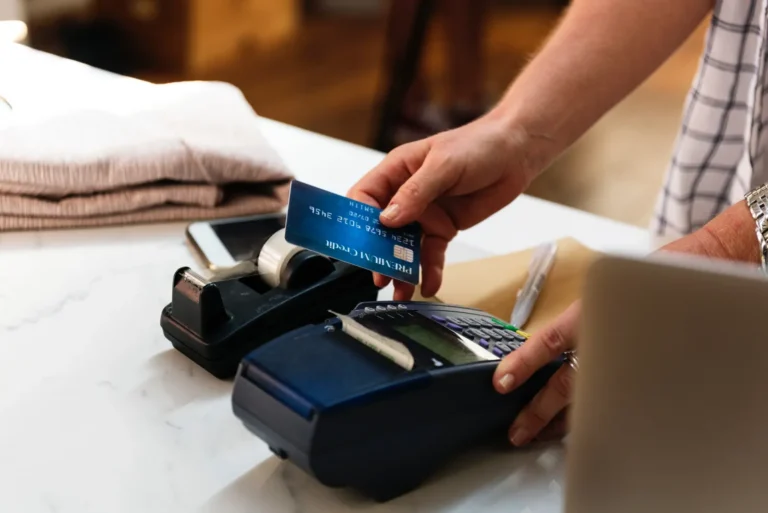
At its core, the challenge of how to avoid duplicate travel billings is a challenge of synchronization. A “duplicate” is often not two identical finalized charges, but rather a “pending” authorization that fails to fall off once the final “settlement” charge is posted. This is frequently seen in the hospitality sector, where an initial credit card “swipe” for incidentals creates a temporary hold. If the final checkout is processed as a new transaction rather than a completion of the original authorization, the traveler’s credit limit is effectively hit twice.
A common misunderstanding is that high-tier credit cards or “premium” travel agencies provide a natural immunity to these errors. In reality, the more intermediaries involved—a travel agent, a wholesaler, and a local property management system—the higher the probability of a data collision. Oversimplification leads many to believe that simply “waiting it out” is the best strategy. While many holds eventually expire, the opportunity cost of tied-up liquidity, particularly in corporate settings, can disrupt cash flow forecasting and interest-earning potential.
To master this domain, one must recognize the distinction between “Soft Duplicates” (temporary holds) and “Hard Duplicates” (actual settled funds leaving the account). Preventing the former requires specific behavior at the point of sale, while preventing the latter requires a rigorous pre-travel documentation strategy. Both are essential components of a robust financial defense.
Deep Contextual Background: The Legacy of the “Batch”
The persistence of duplicate billings is a ghost of 20th-century computing. In the early days of electronic travel bookings, data was processed in “batches” at the end of the business day. This delay between the transaction and the settlement created a window of uncertainty. Even today, while the front-end user experience feels instantaneous, the back-end settlement systems often still rely on these legacy batching windows.
Furthermore, the rise of “Online Travel Agencies” (OTAs) added a layer of complexity known as the “Merchant vs. Agency” model. In an Agency model, the OTA passes your card details to the hotel; in a Merchant model, the OTA charges you directly and then pays the hotel using a “Virtual Credit Card” (VCC). When these two models overlap—for example, if a traveler provides a personal card at the front desk for a “pre-paid” room—the system often defaults to charging the guest again, unaware that the OTA has already settled the balance. This systemic lack of communication is the primary driver of modern redundancy.
Conceptual Frameworks and Mental Models
To navigate the travel payment landscape, one should adopt the following mental models:
-
The Single Source of Truth (SSoT): Designate a single payment instrument or a centralized wallet for all travel-related expenditures. Fragmenting spend across multiple cards increases the “surface area” for errors and makes reconciliation significantly more difficult.
-
The Authorization Lifecycle: Visualize every transaction as a two-part event: the Hold and the Capture. Understanding the timeout periods for various banks (typically 3 to 15 days) allows for better management of credit utilization.
-
The Intermediary Tax: Operate under the assumption that every layer added between the traveler and the service provider (e.g., booking a flight through a third-party site rather than the airline) increases the risk of billing friction by a factor of X.
Key Categories of Redundancy and Trade-offs
Reducing duplicates requires identifying the specific mechanism of failure.
| Category | Trigger Mechanism | Primary Trade-off |
| Incidental Overlays | Hotel check-in holds for “extras” | Security vs. Liquidity (High holds ensure service but lock funds) |
| Aggregator Overlap | Prepaid OTA bookings charged again at property | Convenience vs. Direct Control (OTAs are easy but prone to VCC errors) |
| Refresh-Loop Errors | Double-clicking or connection timeouts during checkout | Speed vs. Accuracy (Faster booking flows may bypass confirmation checks) |
| Subscription Drift | Expired or recurring travel memberships | Automation vs. Oversight (Auto-renewals save time but often overbill) |
The decision logic here usually revolves around Control vs. Convenience. Booking directly with a provider (airline/hotel) offers the highest level of control and the lowest risk of duplicate billing but often lacks the consolidated interface or loyalty perks of an aggregator.
Detailed Real-World Scenarios How to Avoid Duplicate Travel Billings

Scenario A: The “Pre-paid” Hotel Disconnect
A corporate traveler books a non-refundable room via a third-party portal. Upon arrival, the front desk asks for a card for “incidentals.” The clerk, due to a lack of training or a system prompt, accidentally processes a full “stay” authorization.
-
Failure Mode: The guest’s card is charged by the portal and “held” by the hotel for the same amount.
-
Second-Order Effect: If the traveler is near their credit limit, subsequent business expenses (meals, transport) may be declined.
-
Prevention: The traveler must explicitly state, “This room is pre-paid; please only authorize for incidentals,” and request a $0.00 room-rate confirmation printout upon check-in.
Scenario B: The Flight Booking Timeout
A user is booking an international flight during a period of high network latency. They click “Purchase,” the screen freezes, and they click again.
-
Constraint: The airline’s API may have processed the first request even though the user didn’t receive a confirmation number.
-
Decision Point: Do not refresh. Instead, check the email inbox and the banking app “Pending” section immediately before attempting the transaction again.
The Economics of Recovery: Costs and Dynamics
The true cost of a duplicate billing is not just the dollar amount of the charge, but the “Resource Drain” required to rectify it.
| Activity | Estimated Time | Financial Impact |
| Manual Reconciliation | 2–5 hours / month | Staff salary / Opportunity cost |
| Bank Dispute Process | 30–90 days | Capital lock-up / Interest loss |
| Account Overdraft Fees | Instant | $25 – $100 per instance |
| Corporate Audit Failure | Annual | Potential regulatory or tax penalties |
For a high-volume traveler, the variability of these costs is high. A single $2,000 duplicate can trigger a cascade of secondary failures if not addressed within the same billing cycle.
Tools, Strategies, and Support Systems
-
Virtual Credit Cards (VCCs): Generate a unique card number for every booking. If a duplicate is attempted, the card (which is set to a specific limit) will decline the second charge.
-
Centralized Expense Management (e.g., Concur, Expensify): These tools flag identical amounts from the same merchant automatically.
-
Real-Time Push Notifications: Setting bank alerts to “Always On” ensures you see a double-charge the second it happens, allowing for an immediate “void” at the merchant level rather than a “dispute” later.
-
Dedicated Travel “Buffer” Accounts: Using a separate card for travel prevents a duplicate hold from affecting your primary living expenses.
-
Digital Folio Monitoring: Many hotel chains now allow you to view your “live” bill in their app. Checking this daily prevents surprises at checkout.
The Risk Landscape: Compounding Failure Modes
The danger of duplicate billing often lies in the “Cascade Effect.” A duplicate charge on a credit card can lead to:
-
Utilization Spikes: Lowering your credit score temporarily.
-
Interest Accrual: If the duplicate isn’t removed before the statement closes, you may be charged interest on money you never actually spent.
-
Fraud Triggering: Multiple identical charges can trigger a “Security Freeze” on your card, leaving you stranded in a foreign city without access to funds.
Governance and Long-Term Adaptation
For organizations, how to avoid duplicate travel billings must be a matter of policy. A layered checklist should be integrated into the corporate travel handbook:
-
Pre-Travel: Confirm all bookings have a generated “Statement of Work” or “Booking Reference.”
-
During Travel: Retain every physical and digital receipt, specifically looking for “Total Due: $0.00” on pre-paid vouchers.
-
Post-Travel: Conduct a “T+3” review (reviewing statements three days after the trip ends) to ensure all authorizations have cleared or settled correctly.
Measurement and Tracking Documentation
To evaluate the health of your travel spend, track these qualitative and quantitative signals:
-
The “Hold-to-Settlement” Ratio: What percentage of your transactions result in a temporary hold exceeding 72 hours?
-
Recovery Lead Time: How many days does it take, on average, for a duplicate to be identified and reversed?
-
The Merchant “Blacklist”: Document specific hotel properties or booking sites that consistently fail the VCC handshake.
Common Misconceptions
-
“Debit cards are safer for travel.” False. Debit cards are the highest-risk instrument for duplicates because they pull “real” cash from your account. Credit cards provide a “buffer” of the bank’s money.
-
“A confirmation email is proof of payment.” Not necessarily. It is proof of a booking. The payment is a separate financial event that may happen days later or at the property.
-
“Banks will automatically catch duplicates.” Most banks only flag duplicates if they occur within seconds of each other. If the second charge happens 24 hours later, it is rarely flagged as an error.
Conclusion
The pursuit of transactional purity in travel is an ongoing process of refinement. As global payment rails move toward “Real-Time Payments” (RTP), the window for errors will theoretically shrink, yet the complexity of multi-layered distribution ensures that redundancy will remain a persistent threat. To successfully navigate this environment, one must treat financial data with the same rigor as physical logistics. By adopting a “Verify, Then Trust” approach—anchored in modern tools and disciplined reconciliation—travelers can ensure that their capital is deployed for its intended purpose: facilitating movement, not feeding the friction of a fragmented system.