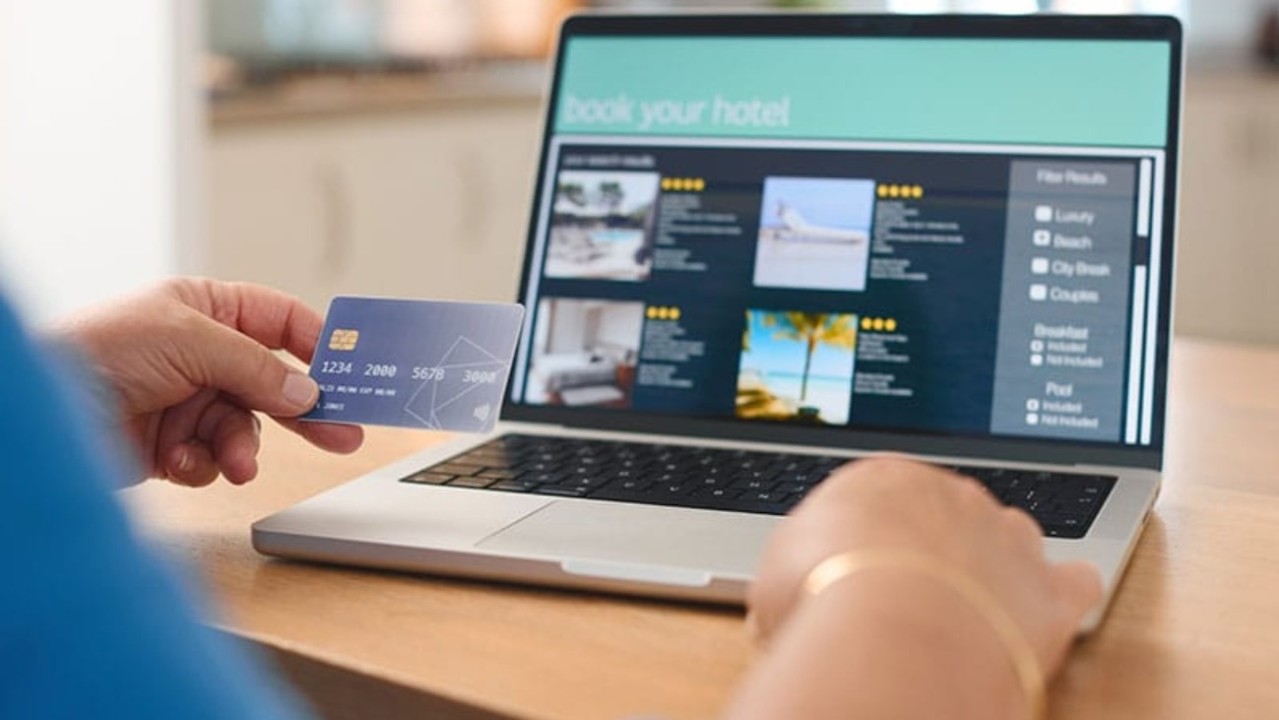
Best Travel Booking Software for Teams: The 2026 Definitive Guide
The orchestration of corporate mobility has undergone a radical transformation from a back-office administrative burden to a strategic lever for organizational agility. In the modern enterprise, the ability to deploy teams across geographic boundaries is not merely a logistical challenge but a test of a company’s operational architecture. Best Travel Booking Software for Teams. As business travel becomes increasingly decentralized, the reliance on fragmented, consumer-grade tools has proven insufficient, often resulting in “leakage”—unmanaged spend that escapes the oversight of finance and security departments.
The emergence of sophisticated platforms designed specifically for collaborative travel indicates a shift toward “connected mobility.” This is a state where booking, policy enforcement, expense reconciliation, and duty of care are no longer siloed functions but are integrated into a singular digital workflow. For a growing organization, the primary objective is to eliminate the friction that historically accompanied professional travel: the endless back-and-forth of email approvals, the manual tracking of receipts, and the lack of real-time visibility into the safety of personnel on the ground.
Selecting the best travel booking software for teams requires looking past the user interface to the underlying data structures and integration capabilities. A platform’s value is increasingly measured by its ability to resolve the paradox between employee autonomy and corporate control. The ideal system empowers a team member to book their own itinerary while simultaneously ensuring that every selection remains within the bounds of pre-defined budgets, safety protocols, and sustainability mandates. This analysis provides an exhaustive framework for evaluating these systems within the context of long-term scalability and institutional risk management.
Understanding “best travel booking software for teams”
Defining the best travel booking software for teams requires a multi-perspective analysis that accounts for the divergent needs of various stakeholders. To a traveler, the “best” tool is one that replicates the intuitive ease of a consumer travel app but provides the security of knowing the bill is handled by the company.
The primary risk in this selection process is oversimplification. Many organizations fall into the trap of viewing travel software as a “booking engine” alone. In reality, the booking is the easiest part of the process. The complexity lies in the “exceptions”—the cancellations, the last-minute re-routings, and the enforcement of dynamic policies that must adapt to fluctuating market prices. A software platform that facilitates a booking but fails to provide 24/7 support during a mechanical flight delay is not a corporate solution; it is a liability.
True team-centric software must also account for the collaborative nature of modern work. This means supporting “group bookings” where multiple itineraries can be synchronized for an offsite, or “guest booking” features for interview candidates and consultants. The architecture should be resilient enough to handle a global workforce operating in different currencies and jurisdictions while maintaining a “single source of truth” for the organization’s travel data.
Deep Contextual Background
The trajectory of corporate travel management has moved from high-touch manual service to high-tech automated ecosystems. In the 1990s, travel was almost exclusively handled by Travel Management Companies (TMCs) via telephone. A “travel desk” acted as the gatekeeper, wielding immense control but creating significant bottlenecks. The 2000s saw the rise of the Online Booking Tool (OBT), which shifted the entry of data to the traveler but often lacked the inventory depth and intuitive design of nascent consumer sites like Expedia.
This period was marked by the “Rogue Booking” era. Employees, frustrated by the clunky interfaces of corporate tools, began booking on public sites. This led to a complete loss of “Duty of Care”—the legal and moral obligation of a company to ensure employee safety—as companies could no longer track where their people were staying or flying.
The current era, beginning in the late 2010s and maturing in 2026, is characterized by “Unified Spend Management.” The distinction between a booking tool and an expense app has blurred. Platforms now use “active policy enforcement” at the point of purchase rather than reactive auditing after the money has been spent. This evolution has been fueled by API-first architectures that allow travel software to communicate directly with HR systems, ERPs, and slack-based communication channels, making travel an invisible, integrated part of the daily work environment.
Conceptual Frameworks and Mental Models
To evaluate the best travel booking software for teams, organizations can employ several mental models to ensure the software aligns with their strategic goals.
The “Frictionless Feedback Loop” Model
This framework posits that the efficiency of a travel program is inversely proportional to the number of clicks required to finalize a compliant booking. If the software requires more than five minutes to complete an itinerary, “behavioral leakage” will occur, where employees return to familiar consumer sites.
The Dynamic Guardrail Framework
Instead of rigid, static policies (e.g., “All hotels must be under $200”), this model utilizes software that applies context-aware limits. For example, a hotel cap in New York City during a major conference should be automatically adjusted based on real-time market averages. Software that supports this level of intelligence prevents the constant need for manual “exception” approvals.
The “Duty of Care” Triangle
This model measures a platform’s security efficacy based on three pillars: Visibility (knowing where everyone is), Communication (the ability to send push alerts to travelers), and Remediation (the ability to extract or re-book a traveler instantly). A platform that excels in booking but fails in any of these security pillars is incomplete.
Key Categories and Variations
The market for travel software is no longer a monolith. It has split into several specialized categories, each offering distinct trade-offs.
1. Traditional TMC with an OBT Overlay
This is the legacy model where a massive travel agency provides a white-labeled booking tool. It offers deep human support but often suffers from antiquated technology and a slower innovation cycle.
2. Modern “All-in-One” T&E Platforms
These represent the current “gold standard” for growth-oriented teams. These platforms (e.g., Navan, TravelPerk) integrate booking, corporate cards, and expense management. The primary trade-off is often a higher platform fee in exchange for massive administrative time savings.
3. Lightweight “Booking-Only” Gateways
Ideal for small teams or startups that only need access to corporate rates without the need for complex expense workflows. These are often free or low-cost but lack robust security and reporting features.
4. Finance-First “Card-Centric” Solutions
Platforms where the travel booking is an extension of a corporate card (e.g., Ramp, Brex). These excel at spend control but may lack the deep “traveler support” and inventory of a travel-first platform.
5. Enterprise ERP-Integrated Suites
Deeply complex systems (e.g., SAP Concur) designed for global conglomerates. They offer unmatched customization but can be notoriously difficult for teams to navigate and require dedicated “admins” to manage.
Comparative Analysis of Software Architectures
| Feature | All-in-One Platforms | Card-Centric Tools | Legacy TMCs | ERP Suites |
| User Experience | High (Consumer-like) | Moderate | Low to Moderate | Low |
| Inventory Depth | Very High (GDS + NDC) | Moderate | High (GDS) | High |
| Support Speed | Immediate (In-app) | Variable | Moderate (Phone) | Variable |
| Policy Flexibility | High (Dynamic) | High (Budget-based) | Low (Static) | Maximum (Custom) |
| Implementation | Days/Weeks | Hours/Days | Months | 6+ Months |
Operational Scenarios and Decision Logic Best Travel Booking Software for Teams
The utility of the best travel booking software for teams is often only visible when things go wrong.
-
Scenario A: The “Snowmageddon” Event: A major airport closes due to weather.
-
Failure Mode: A traveler who booked on a consumer site must wait on a four-hour hold with an airline.
-
Software Solution: An AI-driven travel platform identifies all affected team members and automatically offers re-booking options via chat before the traveler even lands.
-
-
Scenario B: The Multi-Leg “Roadshow”: A sales team is visiting five cities in five days.
-
Failure Mode: Each hotel receipt and flight must be manually uploaded, and one missing receipt holds up the entire expense report.
-
Software Solution: A unified platform captures the receipt at the “point of swipe” on a corporate card and auto-populates the expense report, requiring zero manual entry from the team.
-
-
Scenario C: The Interview Candidate Experience: A high-value recruit needs to fly in from another country.
-
Failure Mode: The recruit pays out of pocket and waits 30 days for a reimbursement, creating a negative first impression.
-
Software Solution: The recruiter sends a “guest booking” link with a pre-defined budget; the candidate books their own flight, and the company is billed directly.
-
Financial Dynamics: Direct and Indirect Costs
The true cost of travel software is often obscured by “per-transaction” or “per-seat” pricing. To understand the total cost of ownership (TCO), one must analyze the “hidden” expenses.
Cost Breakdown Table (Estimated)
| Cost Driver | Typical Range | impact on TCO |
| Platform Fee | $0 – $500/month | Fixed cost for access |
| Booking Fees | $0 – $25 per trip | Variable cost based on volume |
| Admin Time | 2 – 10 hours/week | The “Shadow Cost” of manual work |
| Reimbursement Lag | 1% – 3% of spend | Cost of capital for employee loans |
| Inventory Markups | 0% – 5% | The cost of “hidden” commissions |
Opportunity Cost: For a team of 50 travelers, switching from manual processing to an automated platform can save an estimated 400 hours of administrative work per year. At an average loaded salary, this represents a “recovered” value that often far exceeds the platform’s subscription cost.
Integrated Support and Duty of Care Systems
A software platform is only as good as the infrastructure that supports it. When evaluating the best travel booking software for teams, look for these specific “support” indicators:
-
Direct NDC (New Distribution Capability) Pipes: Does the software connect directly to airlines, or is it just scraping websites? Direct pipes ensure better seat selection and fewer “lost” bookings.
-
Unused Ticket Tracking: Millions of dollars in corporate flight credits go unused every year. The best software automatically flags these credits and applies them to the next booking.
-
Real-Time Traveler Tracking: A map interface that shows the exact location of every team member currently on a trip.
-
24/7 Human-Led Chat: Not just a chatbot, but a professional travel agent available via the same app used for booking.
-
Carbon Reporting: In an era of ESG (Environmental, Social, and Governance) requirements, the software should automatically calculate the CO2 footprint of every trip.
Risk Landscape: Data Security and Compliance
Centralizing travel data creates a concentrated risk profile. The best travel booking software for teams must adhere to rigorous security standards.
-
GDPR and Data Sovereignty: For global teams, the software must be able to handle PII (Personally Identifiable Information) according to regional laws.
-
PCI Compliance: Since the platform handles credit card data, it must be PCI-DSS Level 1 compliant.
-
Systemic Uptime: If the booking platform goes down, a company’s ability to move its workforce is paralyzed. Look for 99.9% uptime SLAs.
-
Policy Circumvention: Some software allows “back-door” bookings that bypass approvals. Rigorous systems lock down the platform to ensure 100% compliance.
Governance, Maintenance, and Scalability
A travel program is not a “set it and forget it” asset. It requires ongoing governance.
The Travel Audit Checklist
-
Monthly: Review “out-of-policy” bookings and identify the “Top 5” offenders for coaching.
-
Quarterly: Adjust hotel caps based on seasonal price shifts in key markets.
-
Annually: Benchmarking—compare your average “Cost per Mile” against industry standards provided by the software’s analytics.
Scalability Triggers
When does a team outgrow its current tool?
-
International Expansion: When the team needs support for VAT (Value Added Tax) recovery and local language support.
-
Volume Thresholds: When transaction fees become more expensive than a flat-rate enterprise subscription.
Measurement, Metrics, and Evaluation
The success of a travel software implementation should be measured through both quantitative and qualitative signals.
-
Adoption Rate (Leading Indicator): What percentage of team bookings are happening inside the platform? Anything under 90% indicates a failure of the software’s user experience.
-
Average Booking Lead Time: Are people booking 14 days in advance or 2 days? Software that “nudges” travelers to book earlier can save a company 20% on airfare.
-
Net Promoter Score (NPS) for Travelers: Ask the team: “How much do you hate our travel tool?” If the score is low, the productivity losses will eventually outweigh the cost savings.
Deconstructing Common Industry Misconceptions
-
“Booking direct with airlines is cheaper.” This ignores the hours spent on manual expense reporting and the inability to track “Duty of Care.”
-
“Google Flights is all we need.” Google is a search engine, not a management tool. It cannot enforce your company’s $150 hotel limit or track your travelers in a crisis.
-
“We are too small for travel software.” Even for a team of five, the risk of a single “lost” traveler or a fraudulent $2,000 hotel charge justifies a basic management platform.
-
“Travel agents are dead.” Human agents are more important than ever—they are just now “delivered” via an app interface during emergencies.
-
“All software has the same inventory.” Not true. Some tools use “screen scraping” which can lead to ghost bookings and pricing errors that aren’t discovered until the traveler is at the check-in desk.
Ethical Considerations and Sustainability
In 2026, the “best” software is no longer just about cost; it is about “Sustainable Mobility.” The software should provide “Carbon Nudging”—visually highlighting the train option over a short-haul flight or prioritizing hotels with verified green certifications.
Ethical travel also involves “Human Centricity.” Does the software force travelers into red-eye flights to save $50, or does it account for “Traveler Friction” and the impact on mental health and performance? A platform that allows a team to arrive well-rested is ultimately more “profitable” than one that optimizes purely for the lowest ticket price.
Conclusion
The selection of the best travel booking software for teams is a decision that impacts every layer of an organization. It is a commitment to a system that respects the traveler’s time, the finance department’s budget, and the company’s legal obligations. As the “future of work” continues to oscillate between physical presence and digital collaboration, the software that bridges that gap will become an essential component of the corporate tech stack. Mastery of this domain is not about finding the cheapest tool, but about building an ecosystem where travel is a seamless, secure, and strategic extension of the business itself.