
How to Plan Executive Retreats on a Budget: A 2026 Strategy Guide
The executive retreat occupies a singular space in corporate governance. It is simultaneously viewed as a luxury expense and a mission-critical necessity for high-level alignment, yet the fiscal climate of 2026 often demands a reconciliation between these two identities. How to Plan Executive Retreats on a Budget. When organizations seek to condense their strategic planning into a singular physical gathering, the pressure to deliver a “premium” experience often leads to inflated budgets that prioritize aesthetic optics over cognitive output. However, the efficacy of an offsite is rarely correlated with the cost of the linens or the vintage of the wine; it is rooted in the quality of the intellectual environment and the removal of operational friction.
Successfully navigating the logistical complexity of high-level meetings requires a departure from traditional event planning. It demands a shift toward “architectural” planning—building a space that fosters psychological safety and focused debate without relying on the crutch of high-end resorts. When a firm begins to investigate how to plan executive retreats on a budget, it is essentially engaging in an exercise of essentialism. The goal is to identify the precise variables that trigger strategic breakthroughs and to fund those aggressively, while ruthlessly pruning the secondary expenditures that exist merely to satisfy legacy expectations of corporate prestige.
This essentialist approach is particularly relevant in an era where distributed leadership teams are the norm. The retreat is no longer just a meeting; it is a vital re-synchronization of a human network that spends most of its year communicating through digital proxies. Consequently, the value of the “budget” retreat lies in its ability to strip away the distractions of traditional luxury, forcing a direct and unvarnished engagement with the organization’s most pressing challenges. By treating the budget as a creative constraint rather than a limitation, planners can design experiences that are more authentic, more focused, and ultimately more impactful than their high-spend counterparts.
Understanding “how to plan executive retreats on a budget”
The primary hurdle in learning how to plan executive retreats on a budget is the entrenched association between “strategy” and “exclusivity.” Many boards of directors and C-suite leaders subconsciously believe that the weight of a decision is validated by the cost of the room in which it is made. To plan effectively on a budget, one must dismantle this association and replace it with a focus on “contextual luxury”—the idea that the only luxury that matters in a retreat is the luxury of uninterrupted time and high-quality facilitate focus.
A common misunderstanding is that a budget retreat is a “cheap” retreat. In reality, a budget-conscious strategy involves a high degree of fiscal intelligence. It is about the reallocation of capital. Instead of spending $50,000 on a five-star hotel’s catering and AV package, a budget-conscious planner might spend $10,000 on a unique, secluded private estate and $5,000 on a world-class facilitator, saving $35,000 while potentially increasing the strategic output of the meeting.
The Multi-Perspective Definition
-
The Financial Perspective: An exercise in maximizing the “Output-to-Outlay” ratio. Every dollar spent must be defensible as a contributor to the retreat’s primary objective (e.g., a three-year roadmap).
-
The Cultural Perspective: A move toward “earned” prestige. Budget retreats can foster a sense of “scrappy” solidarity, signaling to the rest of the organization that the leadership team is fiscally responsible and focused on work rather than perks.
-
The Cognitive Perspective: The removal of “Status Anxiety.” High-end luxury environments can sometimes stifle honest debate as participants subconsciously perform to the level of the setting. More grounded, unique environments often facilitate more candid, vulnerable, and productive conversations.
Oversimplification in this domain often manifests as “Austerity Overreach,” where planners cut costs on essential items—like ergonomic seating, high-speed internet, or quality food—leading to a distracted and frustrated executive team. The “budget” refers to the elimination of fluff, not the elimination of functional necessities.
The Evolution of the Corporate Offsite
The history of the executive retreat has mirrored the broader trends of corporate excess and correction. In the 1980s and 90s, the “Boondoggle” was the standard—lavish golf resorts where the strategy was often secondary to the networking and recreation. This era established the aesthetic blueprint that many still struggle to discard. The 2008 financial crisis served as the first major corrective, forcing a shift toward “Functionalism,” where retreats were moved back into boring hotel conference rooms to signal austerity to shareholders.
By 2026, we have reached the “Post-Functional” era. Modern leadership teams recognize that boring conference rooms are the enemy of creativity, yet the lavishness of the past feels out of touch and unnecessary. The current trend is toward “Hyper-Regionalism” and “Residential Planning”—utilizing high-end private homes, converted industrial spaces, or nature-focused properties that provide privacy and a distinct “sense of place” without the institutional overhead of a major hotel brand. This evolution allows for a more bespoke experience that fits a “budget” by leveraging the sharing economy and local partnerships rather than global hospitality conglomerates.
Mental Models for High-Impact, Low-Cost Planning
1. The “Signal-to-Noise” Ratio
In this framework, the “Signal” is the strategic content and the “Noise” is the logistics. A budget retreat should aim for the highest possible signal. If a five-course meal (Noise) takes three hours out of a day that was supposed to be about a merger (Signal), the cost is not just the price of the food, but the lost strategic momentum.
2. The Isolation vs. Accessibility Framework
Budget planning often involves a trade-off. A venue that is further away (harder to access) is often significantly cheaper than one near a major airport. Planners must weigh the cost of executive travel time against the savings and the benefit of “Deep Isolation,” which prevents participants from slipping back to the office or taking “emergency” calls.
3. The “In-Sourcing” of Expertise
Rather than hiring an expensive agency to manage the entire retreat, a budget-conscious organization utilizes its internal talent for logistics and “In-Sources” only the most critical external element: the facilitator. This model recognizes that the planning is a commodity service, but the facilitation is a strategic one.
Retreat Archetypes and Structural Variations
Selecting the right “vehicle” for the retreat is the most significant budget lever available to a planner.
| Archetype | Structural Focus | Cost Profile | Trade-off |
| The “Stealth” Local | High-end local house/loft | Low (No airfare) | Less “mental distance” from the office |
| The Nature Pivot | Glamping or rustic lodges | Moderate | Possible lack of high-end AV/tech |
| The “Off-Season” Hub | Ski resorts in summer | Low | Environmental optics (weather/mood) |
| The “University” Model | Academic/Research centers | Moderate | More formal/structured atmosphere |
| The Distributed Micro-Offsite | Smaller regional hubs | Low to Moderate | Harder to achieve total team alignment |
Decision Logic: The “Home-Court” Advantage
The most effective way to plan an executive retreat on a budget is often to stay within a 2-hour drive of the headquarters but to choose a venue that is radically different from the office environment. This eliminates the largest single line item—airfare—and much of the logistical risk, allowing those funds to be redirected into high-quality food and an elite facilitator.
Operational Scenarios and Decision Calculus How to Plan Executive Retreats on a Budget
Scenario A: The Lean Startup Pivot
A team of five needs to redefine their product roadmap after a failed funding round.
-
The Mistake: Booking a standard Marriott conference room.
-
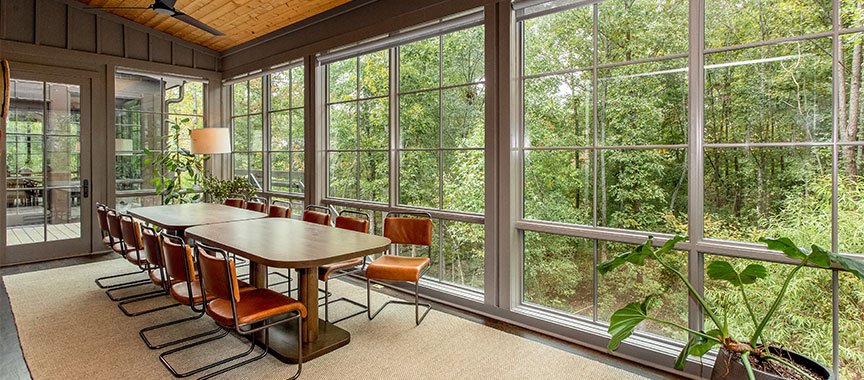
The Budget Fix: Renting a large, architecturally interesting Airbnb in a nearby rural town. The shared kitchen facilitates informal “dinner-table” strategy, and the change of scenery breaks the patterns of the office.
-
Result: Total cost under $3,000; high psychological safety and breakthrough collaboration.
Scenario B: The Enterprise Re-alignment
A 15-person leadership team needs to integrate two departments post-acquisition.
-
The Mistake: A generic resort in Hawaii.
-
The Budget Fix: Utilizing a corporate “Off-Season” strategy—booking a boutique lodge in a mountain town during the “shoulder” month of October.
-
Result: 50% savings on room rates; the cooler weather and cozy environment foster the intimacy needed for sensitive integration talks.
The Economics of Essentialism: Direct and Indirect Costs
When you how to plan executive retreats on a budget, you must account for the “Shadow Budget”—the cost of executive time.
| Cost Element | Average Budget Allocation | The “Essentialist” Reduction |
| Venue/Lodging | 40% | Use private rentals or off-season boutiques |
| Food & Beverage | 20% | High-quality local catering vs. hotel banquet |
| Facilitation | 15% | DO NOT CUT. This is the core value. |
| Travel/Transport | 15% | Shift to regional/driving distance hubs |
| AV/Tech/Activities | 10% | Use “Analog” tools (whiteboards) for focus |
Indirect Opportunity Cost: If 10 executives making $300k/year spend 3 days in a poorly facilitated retreat, the company has “wasted” roughly $35,000 in salary alone, regardless of the venue cost. A budget retreat that fails to produce a clear outcome is the most expensive retreat possible.
Support Systems and Strategic Infrastructure
-
The Independent Facilitator: A neutral party who keeps the conversation on track and prevents “hippo” (highest-paid person’s opinion) dominance.
-
Analog Collaboration Tools: Giant Post-it notes, physical whiteboards, and “no-laptop” zones. These are cheap and more effective for deep thinking than digital tools.
-
Local “Fixers”: Hiring a local assistant for the three days to handle coffee, lunch, and tech issues, rather than relying on expensive “event managers.”
-
Curation Over Catering: Instead of hotel buffets, curate local food experiences (e.g., a high-end local chef doing one “family-style” dinner).
-
Pre-Retreat “Homework”: Using surveys or 1-on-1 calls to gather data before the retreat so the time together is spent on deciding, not reporting.
-
Digital Detox Vaults: Physical boxes for phones to ensure 100% presence.
Risk Landscape: Failure Modes in Budget Planning
1. The “Austerity Fatigue” Risk
If the venue is too basic—for example, a house where executives have to share bedrooms or bathrooms—the distraction of discomfort will degrade the quality of the strategic work. Privacy is a non-negotiable for the executive tier.
2. The “DIY” Logistical Collapse
Planners often try to save money by having executives cook their own meals or set up their own AV. This is a catastrophic failure of resource allocation. An executive’s time should never be spent washing dishes or troubleshooting a HDMI cable.
3. The Lack of a “Third Space”
A retreat needs a dedicated “work” area and a separate “relaxation” area. If the strategy session happens around the same table where people are eating, the mental “modes” bleed into each other, preventing deep focus and genuine relaxation.
Governance and Long-Term Adaptation
A successful retreat program should be part of a “Annual Strategic Rhythm.”
-
The 90-Day Review: Every retreat should be followed by a 90-day check-in to see if the decisions made are being implemented. If not, the retreat (regardless of budget) was a failure.
-
The “Rotation” Policy: Move the retreat to different regional hubs each year to keep the perspective fresh and to distribute travel burdens among the team.
-
Vendor Benchmarking: Maintain a “Shortlist” of non-traditional venues that have successfully hosted the team before, reducing the “Discovery Cost” of future planning.
Measurement, Tracking, and ROI Evaluation
How do you measure the success of a budget retreat?
-
Metric of Decision Density: How many high-impact decisions were reached per $1,000 of spend?
-
Qualitative Alignment Score: Post-retreat surveys asking: “Do we all agree on our top 3 priorities for Q3?”
-
The “Backlog Clearance” Rate: Did the retreat resolve long-standing interpersonal or strategic frictions that were stalling the company?
Documentation Example: The “Retreat One-Pager”
Every retreat should end with a single page of bulleted commitments. If you can’t produce this, the budget was wasted.
Common Misconceptions and Strategic Pitfalls
-
“We need a beach to be creative”: Creativity is driven by constraints and focus, not by the proximity to saltwater.
-
“Expensive activities (like golf) build teams”: Team building happens through shared work and honest conversation, not through leisure activities that some people might find exclusive or boring.
-
“A budget retreat looks bad to the board”: Boards increasingly value fiscal discipline. A high-impact, low-cost retreat is a sign of a mature, focused leadership team.
-
“The hotel’s event coordinator will help us with strategy”: They are there to sell rooms and food. They have zero interest or expertise in your company’s roadmap.
Ethical and Practical Considerations
In the context of how to plan executive retreats on a budget, the “Human Cost” must be considered. Budgeting should never come at the expense of accessibility (e.g., a venue that isn’t ADA compliant) or inclusivity. Furthermore, if a retreat is significantly scaled back, the leadership team should be transparent with the rest of the company about why—framing it as a commitment to fiscal health and mission-focus. This builds trust and sets a “Lead by Example” culture for the entire organization.
Synthesis: The Future of Strategic Gathering
The “Budget Executive Retreat” is not a compromise; it is a refined strategy for the modern era. By stripping away the performative elements of corporate travel, organizations can create a “Sacred Space” for the kind of deep, uncomfortable, and revolutionary thinking that global competition demands. The future of leadership gatherings is not found in the luxury resort, but in the intentional curation of time, space, and focus. When you plan with a budget, you are forced to plan with a purpose—and in the world of high-stakes strategy, purpose is the only luxury that truly matters.