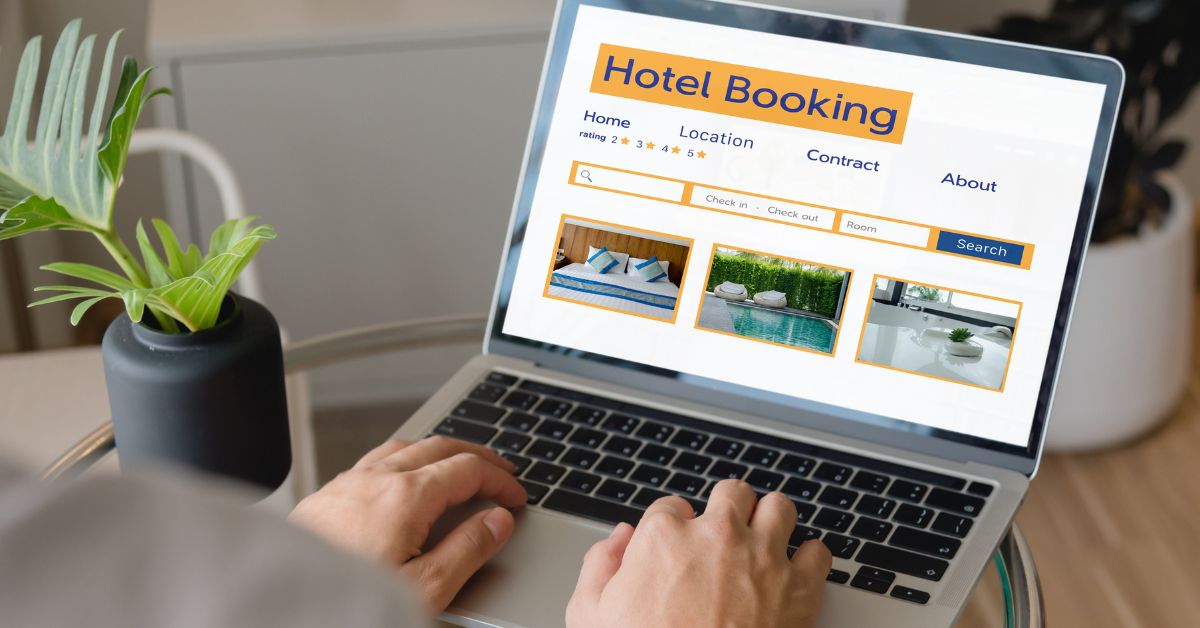
Best Corporate Hotel Booking Platforms: The 2026 Strategic Guide
The physical movement of personnel remains one of the largest controllable expenses for a modern enterprise, second only to payroll in many service-oriented sectors. Yet, for decades, the procurement of lodging has been treated as a fragmented administrative burden rather than a strategic lever. Best Corporate Hotel Booking Platforms. While leisure travelers can afford the luxury of browsing multiple tabs for the best price, the corporate entity requires a far more robust infrastructure—one that balances fiscal discipline with traveler safety and institutional efficiency.
Selecting the best corporate hotel booking platforms is a decision that ripples through an organization’s entire operational fabric. At the surface level, it is about securing a room at a pre-negotiated rate. Beneath that surface, however, lies a complex interplay of duty of care, real-time data visibility, tax compliance across jurisdictions, and the seamless reconciliation of expenses. A platform that fails to integrate with an existing ERP (Enterprise Resource Planning) system or lacks a proactive risk management module is not a tool; it is a liability.
The current landscape of 2026 is defined by the “Consumerization of the Enterprise.” Modern employees, accustomed to the frictionless interfaces of retail booking sites, no longer tolerate clunky, legacy corporate portals. This shift has forced a technological renaissance in the travel management space. Today’s premier platforms are not merely databases of inventory; they are sophisticated engines of policy enforcement and traveler support, utilizing predictive analytics to mitigate disruptions before they manifest as missed meetings or stranded employees.
Understanding “best corporate hotel booking platforms”
To define the best corporate hotel booking platforms, one must first dismantle the myth that “best” is synonymous with “cheapest.” In a corporate context, a platform is an integrated software ecosystem designed to manage the lifecycle of a business stay. This includes pre-trip approval, the booking event, on-trip support, and post-trip financial settlement.
A common misunderstanding is the conflation of an Online Travel Agency (OTA) with a Corporate Travel Management (CTM) platform. While an OTA provides a wide selection of rooms, it typically lacks the “guardrails” necessary for corporate governance. A true corporate platform embeds the company’s travel policy directly into the search results. If a policy dictates that a mid-level manager cannot book a suite or stay in a hotel above a certain star rating in London, those options are either hidden or flagged for manager approval in real-time.
The Complexity of Multi-Stakeholder Utility
A high-performance platform must simultaneously serve three distinct masters:
-
The Traveler: Demands a mobile-first, intuitive interface that mirrors the ease of leisure booking but offers corporate-exclusive perks like late check-out or complimentary Wi-Fi.
-
The Travel Manager: Requires granular visibility into “leakage”—bookings made outside the platform—and the ability to instantly locate employees in the event of a regional crisis.
-
The Finance Department: Needs automated invoicing, VAT (Value Added Tax) recovery support, and clean data that flows directly into accounting software without manual entry.
When these three needs are not aligned, the platform suffers from low adoption. Low adoption is the “silent killer” of corporate travel programs; if employees find the official platform too difficult to use, they book on the open market, leaving the company blind to both spend and safety risks.
The Evolution of Lodging Procurement
The journey from manual phone reservations to the cloud-native ecosystems of 2026 is marked by three distinct eras. Initially, corporate booking was the domain of the Global Distribution System (GDS), a text-heavy, green-screen environment operated by specialized travel agents. This era favored large hotel chains that could afford the connectivity fees, often excluding boutique or budget-friendly options.
The second era brought the rise of the first-generation corporate portals. These were often “walled gardens”—web-based front-ends for the GDS. While they moved the booking to the employee’s desk, they were notoriously slow and lacked the visual richness of consumer sites.
We are currently in the third era: The Era of Unified Commerce. The top platforms today use API-first architecture to pull inventory not just from the GDS, but directly from hotel websites, OTAs, and even short-term rental providers. This “NDC-adjacent” approach ensures that the “best” rate is actually available to the corporate traveler, eliminating the frustration of finding a cheaper price on a public site than on the company’s “discounted” portal.
Mental Models for Selection and Implementation
To move beyond surface-level feature lists, decision-makers can employ specific frameworks to evaluate their organization’s needs.
1. The Friction-Compliance Trade-off
This model suggests that every additional “click” or approval step added to a platform increases the likelihood of “leakage.” The goal of the best corporate hotel booking platforms is to maximize compliance by minimizing friction. If a platform is easier to use than a public site, compliance happens naturally without the need for punitive policies.
2. The “Duty of Care” Responsibility Matrix
This framework evaluates a platform based on its ability to respond to a “What If” scenario. If an earthquake occurs in a specific city, how many seconds does it take the system to generate a list of all employees currently in that zip code, along with their contact details and hotel safety status? A platform that treats lodging as a mere transaction fails this model.
3. The Data-Integrity Loop
This model views booking as the start of a data cycle. The information captured at the moment of booking must be robust enough to drive the expense report, the sustainability (carbon footprint) report, and the negotiation data for the following year’s hotel contracts. If the data is “dirty” or incomplete, the cycle breaks.
Key Categories and Technical Variations
The market for corporate booking solutions is not monolithic. Different organizational sizes and travel frequencies require different technological foundations.
| Category | Primary Benefit | Ideal For | Key Constraint |
| All-in-One TMCs | Total integration of air, hotel, and expense | Mid-to-large enterprises | High implementation cost/time |
| Specialized Hotel Booking Tools | Deepest lodging inventory and rate parity | Companies with high hotel-to-flight ratios | Fragmented travel data (needs air tool) |
| Enterprise ERP Extensions | Seamless financial reconciliation | Conglomerates already using SAP/Oracle | User interface often feels “utilitarian” |
| Free/Lite Platforms | Zero subscription fees; instant setup | Small businesses and startups | Limited policy customization and support |
| High-Touch Boutique Platforms | White-glove service and VIP handling | Law firms, consultancies, C-suite needs | High service fees per transaction |
Decision Logic: The “Buy vs. Subscribe” Pivot
For companies spending less than $100,000 annually on hotels, a “free” business version of a major consumer site is often sufficient. However, once spend crosses the mid-six-figure mark, the “soft costs” of manual expense processing and the loss of negotiated volume discounts make a paid, specialized platform the more profitable choice.
Operational Scenarios and Failure Modes Best Corporate Hotel Booking Platforms

Scenario A: The “Invisible” Traveler
An employee books a hotel in a high-risk region via a public site because the corporate portal didn’t list that specific boutique property. Civil unrest breaks out.
-
Failure: The company’s risk management software shows “zero employees in-country.”
-
Platform Solution: The best corporate hotel booking platforms allow for “shadow booking” capture—where even if an employee books elsewhere, they can forward the itinerary to the platform to be ingested into the safety tracking system.
Scenario B: The Negotiated Rate Disconnect
A company negotiates a $180 “corporate rate” with a hotel chain. When the employee goes to book, the platform shows $210 because the hotel has “blackout dates” or the platform’s GDS feed is lagging.
-
Failure: The employee loses trust in the platform and switches to a public site.
-
Platform Solution: Platforms with “Rate Audit” technology automatically scan bookings to ensure the negotiated rate is applied, or they use “Re-shopping” bots that automatically re-book the room if the price drops after the initial reservation.
The Economics of Managed Stays
The cost of a corporate booking platform is rarely a flat fee. It is a multi-dimensional financial structure.
| Cost Element | Range (Estimated) | Impact Factor |
| Implementation Fee | $0 – $25,000 | System complexity and ERP integration |
| Transaction Fee | $5 – $25 per booking | High-touch service vs. self-service |
| Subscription (SaaS) | $500 – $5,000 / month | Number of active users or features |
| Management Fee | 10% of total spend | Outsourced travel department model |
The Opportunity Cost of “Free”: Companies using free platforms often pay more in the long run through “rate leakage” and the time spent by employees manually entering expense data. A platform that costs $15 per booking but saves 45 minutes of administrative work is, in net terms, a profit-generating tool.
Support Ecosystems and Strategic Tools
The platform itself is only the “visible” part of the service. The supporting infrastructure defines the long-term utility.
-
AI-Driven Re-shopping: Tools that monitor price fluctuations 24/7. If the same room becomes available for $20 less, the system cancels and re-books automatically.
-
VAT Recovery Automation: For international travel, recovering value-added tax can save up to 20% of the trip cost. Top platforms automate the collection of tax-compliant invoices.
-
Virtual Credit Cards: Generating a one-time-use digital card for each hotel stay. This eliminates the need for employees to use personal cards and prevents “bill-back” fraud.
-
Carbon Impact Calculators: Real-time feedback at the point of purchase, showing the CO2 difference between staying at a LEED-certified hotel versus a standard property.
-
Direct-to-Folio Integration: Expenses appearing in the accounting system the moment the guest checks out, with itemized breakdowns (room, tax, meals).
-
24/7 Crisis Response: Not just a chatbot, but a human “agent of record” who can override hotel policies during emergencies.
Risk Landscape and Compliance Gaps
A significant risk in corporate booking is “Inventory Homogenization.” If a platform only pulls from one source (like the GDS), it may miss smaller, safer, or more convenient hotels. This creates a safety gap where employees may choose to stay in a “known” chain hotel that is actually in a higher-crime neighborhood because the platform didn’t offer a closer, safer alternative.
Furthermore, “Data Residency” is a rising risk. Companies operating in the EU or China must ensure their booking platform complies with local data privacy laws (like GDPR). A platform that stores traveler passport and credit card data in a non-compliant jurisdiction can expose the company to massive regulatory fines.
Long-Term Governance and Review Cycles
A “pillar” booking strategy requires an active governance model. The best corporate hotel booking platforms are not static; they must be tuned to the company’s changing footprint.
The Quarterly Review Checklist
-
Adoption Rate: If adoption is below 80%, identify the “frictive” points. Is it the mobile app? The approval workflow?
-
Preferred Hotel Performance: Are the “preferred” hotels actually providing the promised rates and amenities?
-
Rate Parity Audit: Perform a random sample of 20 bookings and check them against public sites to ensure the platform isn’t overcharging.
-
Sustainability Thresholds: Is the company meeting its ESG (Environmental, Social, and Governance) targets for lodging?
Metrics of Success: Beyond the ADR
While the Average Daily Rate (ADR) is a standard metric, it is a lagging indicator. Truly sophisticated organizations track:
-
Advance Purchase Window: Does the platform successfully encourage booking 14+ days out, which typically saves 15-20%?
-
Attachment Rate: What percentage of flights have a corresponding hotel booking? A low attachment rate suggests employees are staying with friends or booking “off-channel.”
-
Support Resolution Time: How quickly does the platform resolve a “no-show” dispute or a room-quality complaint?
-
Employee Net Promoter Score (eNPS): Do travelers actually like using the system?
Common Misconceptions and Strategic Errors
-
“Our travelers want total freedom”: In reality, travelers want curated choice. Providing 5,000 hotel options in Manhattan is overwhelming. Providing five “best-in-class” options tailored to the company’s budget and office location is a service.
-
“Mobile is a nice-to-have”: In 2026, the mobile experience is the experience. If an employee cannot change a hotel reservation from the back of an Uber, the platform is obsolete.
-
“We can negotiate better than the platform”: Unless your company generates thousands of room nights per year in a single city, the platform’s “aggregating power” will almost always beat your internal procurement.
Synthesis of the Corporate Stay Strategy
The evolution of the best corporate hotel booking platforms reflects a broader shift in how modern organizations value their employees’ time and safety. The transaction of “buying a room” has been replaced by the strategy of “managing mobility.”
As the boundaries between work and life continue to blur, and as geopolitical and environmental volatility becomes the new baseline, the platforms that succeed will be those that offer more than just a list of properties. They will be the ones that provide a “digital shield” for the traveler and a “data lens” for the organization. Intellectual honesty requires us to admit that technology alone cannot solve the human complexities of travel, but editorial wisdom proves that the right technology makes those complexities navigable, predictable, and ultimately, profitable.